Visvim and the Shokunin Spirit

Hiroki Nakamura, founder of visvim
TL;DR — product quality turns customers into fans and quality is the distance between perfection and your shortcoming to it.
In Japanese, there’s a word called “shokunin.” It’s one of those words that doesn’t have a direct translation in English but some approximations include “craftsman”, “artisan”, and “tradesman.” It’s commonly used to describe an individual who exhibits extreme care and devotion to his craft—to honor those artists who honor others through the dedicated manner in which they provision their work.
Pursuit of mastery in craft seems to be a core ethic in Japanese culture. Indeed, professionals from many lines of work may be described as shokunin, including sushi chefs, soba chefs, carpenters, swordsmiths, baristas, etc. Care in creation doesn’t require an association with luxury. Instead, it seems to be generally imbued in the output of their island. This ambience in Japan has always attracted and fascinated me.

Tom Cruise in The Last Samurai, 2003
A shared experience other people around my age may relate to is growing up with what I call “the DVD rotation.” Before our content libraries were on the cloud, they were on discs. And so like many others, I grew up watching the same 8 movies over and over again. One of these movies was the 2003 historical war drama, The Last Samurai, starring Tom Cruise. This movie has been on replay in my life for literally as long as I can remember. As I’ve grown up with this movie, I’ve only recently become awake to how much of an influence this film has had on me. It may be the single most influential piece of media I have in my life.
It tells the story of Nathan Algren, a former US Army captain plagued by his conscience for his involvement in American atrocities committed against native tribes in the American Indian Wars. After he strikes out in America, he finds work in service of the Japanese crown, using his battlefield expertise to train an army of Japanese regulars to quell a samurai rebellion intent on halting the emperor’s efforts to rapidly modernize the country. After a confrontation goes awry, Algren is captured and taken as a prisoner by the samurai to their remote mountain village. There, over many months, Algren slowly learns the appeal of their way of life, devotes himself to their cause, and is eventually able to make peace with himself.
As Algren integrates into their society, the contrast between East and West materializes. My favorite sequences in the movie involve Algren narrating his observations of this strange society, as written in his diary entries. I reference this movie because there’s a single line from Algren’s diary whilst a prisoner that so simply captures the shokunin spirit as I feel it.
I encourage you to watch the below montage of these sequences.
“They [the samurai] are an intriguing people. From the moment they wake, they devote themselves to the perfection of whatever they pursue.
I have never seen such discipline.”
Why devote yourself? Why pursue perfection?
I got put onto visvim as a sophomore in high-school through a teenage obsession with my idol and guitar hero, John Mayer. John is known among fashion circles for his predilection for esoteric, artisanal Japanese menswear. It wouldn’t be hyperbolic to say that visvim likely accounts for 90% of his active wardrobe. Some rumors even suggest he owns 2 of every visvim piece ever created. As a teenager, I found myself admiring his clothing almost as much as I admired his guitar playing. I was oddly and unexplainably drawn in.
visvim was founded in 2000 by Hiroki Nakamura in Tokyo. Nakamura began his career as a designer at Burton Snowboards working on durable, high-performance outdoor gear. After 8 years, he left to start making his own sneakers.
visvim’s first product was the FBT, named after the British boy band Fun Boy Three. It was a moccasin with a sneaker-style foam midsole, warping the ancient silhouette into the present-day, ready for use in an urban environment. It was a hit. Thus began visvim’s program of melding the old with the new and East with West. Hiroki created visvim out of his ability to beautifully surf on contradictions. He is gifted at birthing a harmony out of the tension between two juxtaposed cultures.
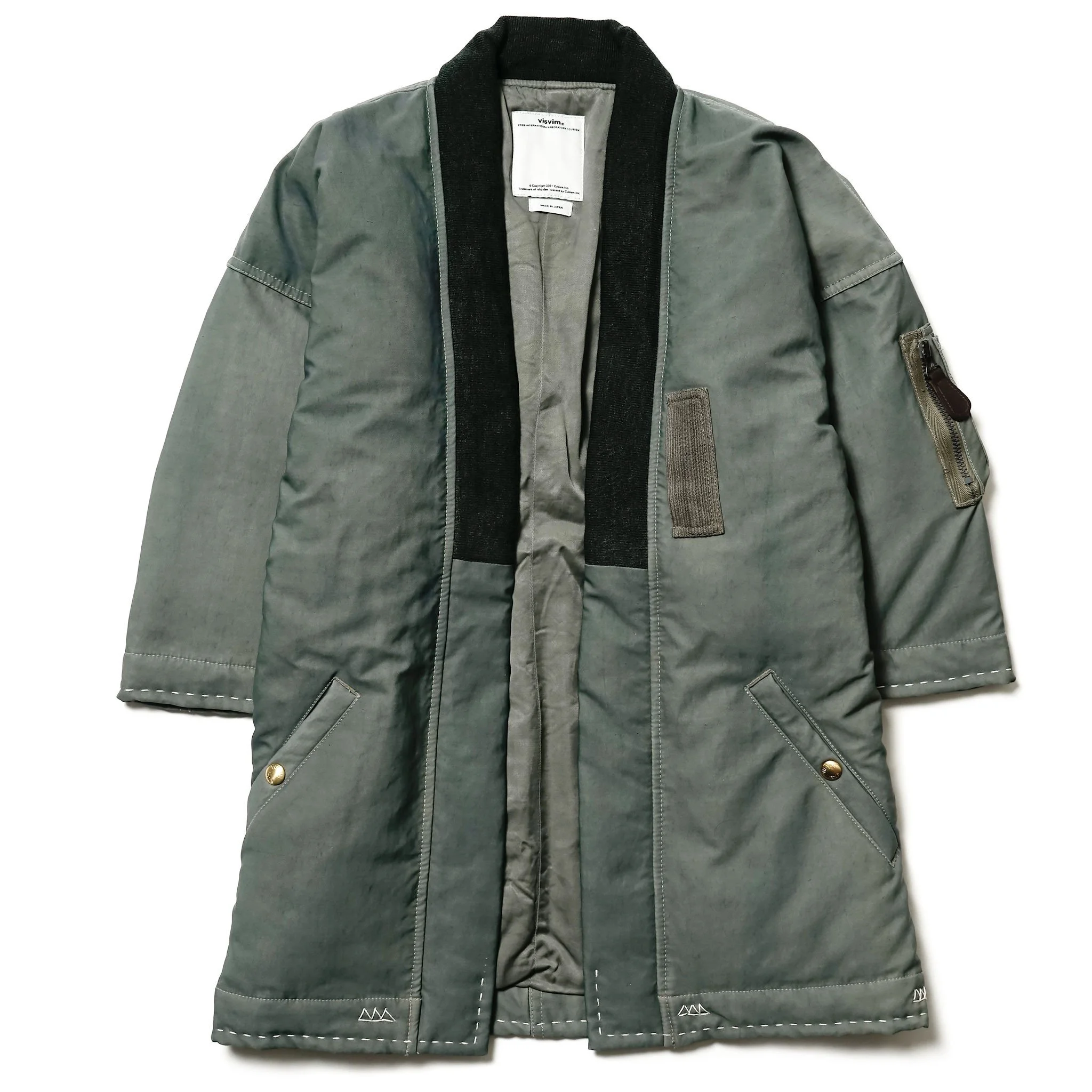
visvim’s Sanjuro Jacket interprets the classic Japanese kimono as a technical flight jacket
I work in tech where the word “founder” has a specific connotation. I suspect tech people give founders of technology companies a brand premium but I find Hiroki to be the most “founder-like” of any entrepreneur I’ve known about. I say this because visvim is a natural extension of who he is as a person.
Hiroki splits time between Los Angeles and Tokyo. His obsession with old world craftsmanship is innate in him as reflected by his homes and the objects he uses in his everyday life. He drives a 1953 Porsche that looks straight out of a roadside museum. His living room is a collection of eclectic Americana and folk-ware. He only listens to music on vinyl records. There are no costumes here and there’s no fashion statement to be made—this is his lifestyle.
Simply put, visvim is the abstraction and productization of his own values. He’s unwavering on his ideological commitments and refuses to compromise on his product. In fact, Hiroki is the only designer at visvim—nearly unheard of for a global brand with +$100MM in sales. visvim is the definition of “founder-led.”
Honor your craft and others will honor you.
When the last manufacturer in Japan who could produce shoes with a Goodyear welt shut down, instead of removing the archaic shoemaking practice from his product, he tracked down an extant manufacturer in China to continue the work. Most visvim shoes still come with a hand sewn Goodyear welt, making their soles fully replaceable. When creating visvim’s first fragrance line, he tapped famed perfumist Blause Martin for help. Dissatisfied with modern perfume making methods, he made Martin create the fragrance line out of ambergris, or sperm whale excrement, as traditionally done in fine French perfumery during the 17th to 19th centuries. Once, Hiroki came upon an old Tibetan robe, dyed in a carmine red that he became enamored with. Unable to recreate a faithful representation of the same hue using modern dyes, he turned to the ancient method of cochineal dying, using crushed beetle powder to recreate the color. Much of visvim’s clothing uses natural dyes, including indigo. Indigo-dying is a time and labor intensive process, practiced in Japan beginning from the 6th century, and slowly going extinct. It involves the cultivation and care of live indigo, a bacteria, and a painstaking, repeated cycle of dying, washing, and drying—all done by hand. visvim also uses mud to dye many of its darker colors like brown and black. Japan’s preeminent mud-dyers work in Amami-Oshima, a small island off its coast. Here, visvim dyes everything from cotton t-shirts to MA-1 type bomber jackets shelled in expensive Italian nylon—a material usually impervious to natural dying methods due to its hydrophobic qualities.
One way to describe visvim is to say they are in the business of keeping artisanal, old-world manufacturing methods alive by using them to make clothes fit for a modern customer. These production methods are not trivial and are not at all the “cost of doing business” in the fashion industry. Who knows how much it costs Hiroki to pursue them? Why put his product at risk like this, with this much delicacy?
“I see Hiroki as an anthropologist, a folklorist who finds the thread that weaves all of our different cultures together, a perfectionist who understands the importance of pure design, form following function… Over the last seventeen years I have bought almost everything Hiroki has made, sometimes several times over. I humbly regard him as the first designer in the world today… I literally cannot wear anything else…”
— Eric Clapton
The brand has this engulfing quality on those it touches. Once an interest in visvim metastasizes, it often leads one to the resolution that it shouldn’t just be something they wear, but everything they wear. Online communities like #visvimgang boast members for whom the brand is their entire wardrobe. It feels total and important. Yet, its stature stands without any imposition. visvim has no marketing department and has not spent a dime on advertising. It doesn’t rely on exclusive drops or other forms of artificial scarcity to create hype. Its own retail stores lack signage.
Instead, visvim focuses on explaining the inspirations for each collection through “dissertations.” These are essentially essays, often accompanied by videos (produced in-house) presenting the work of their network of artisans who serve as their manufacturing base. They do not advertise this content publicly outside of sharing it on their blog. They spend considerable time and effort binding this content into hardcover books that are distributed to friends and VIPs. They do this for free.


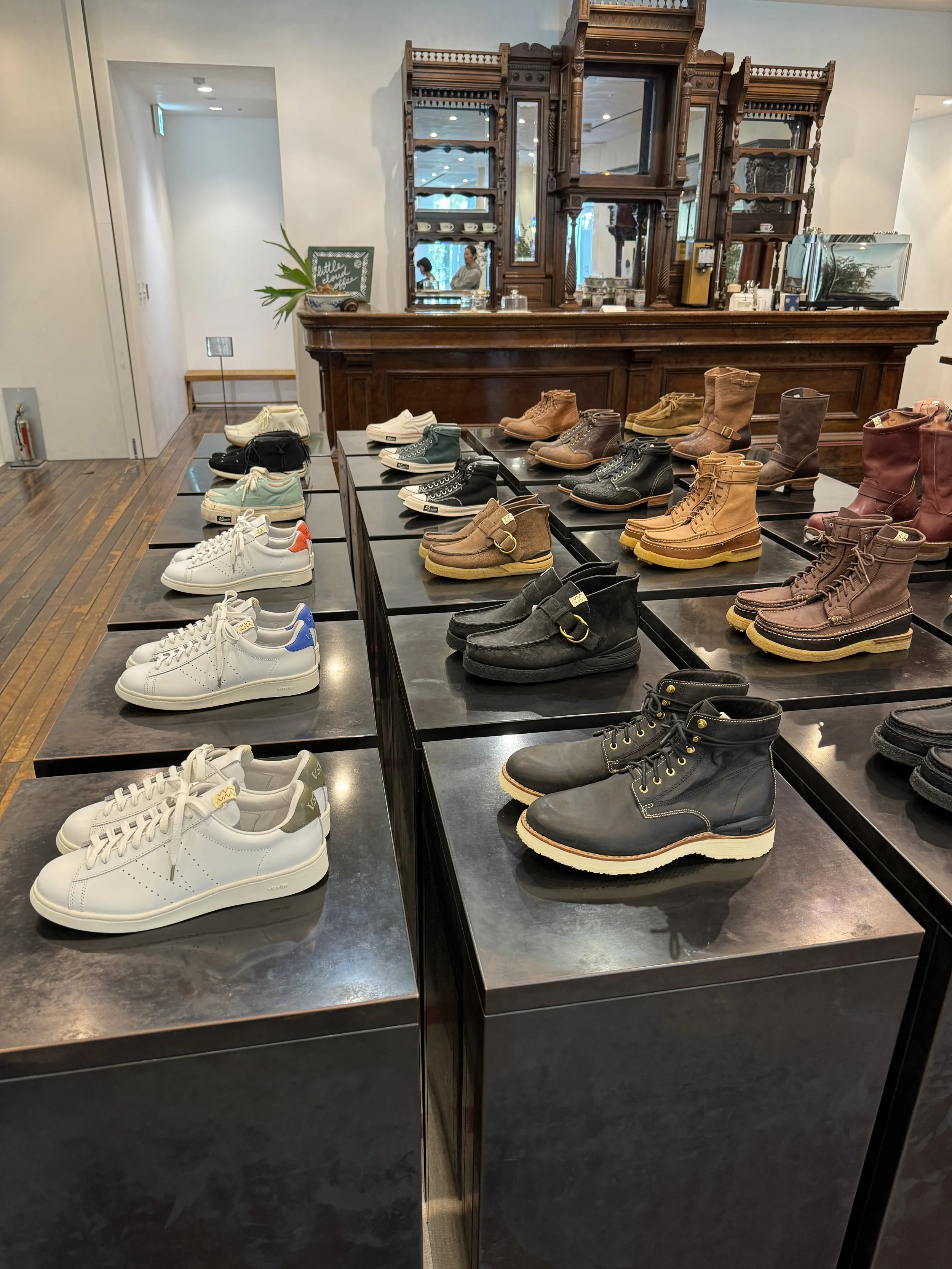
Scenes at various visvim stores from my visit to Tokyo in 2023
“Part of what makes visvim so powerful is that it evokes something in you… my whole road case is visvim. I’m taking all the checked madras.”
— John Mayer
visvim-heads encircle niche online communities. You can only find traces of their congregations on esoteric menswear forums and carefully tagged Instagram hashtags. Disciples of Hiroki-san are the spitting image of a “cult-following.”
But those who know, know. Being into visvim provides that ever-so desirable in-group satisfaction. It served as little surprise to me (and admittedly, a big point of pride) when I saw that the most consequential designer of our time can also often be found outfitted in visvim. You’ve likely seen your favorite creatives wearing it and never noticed.
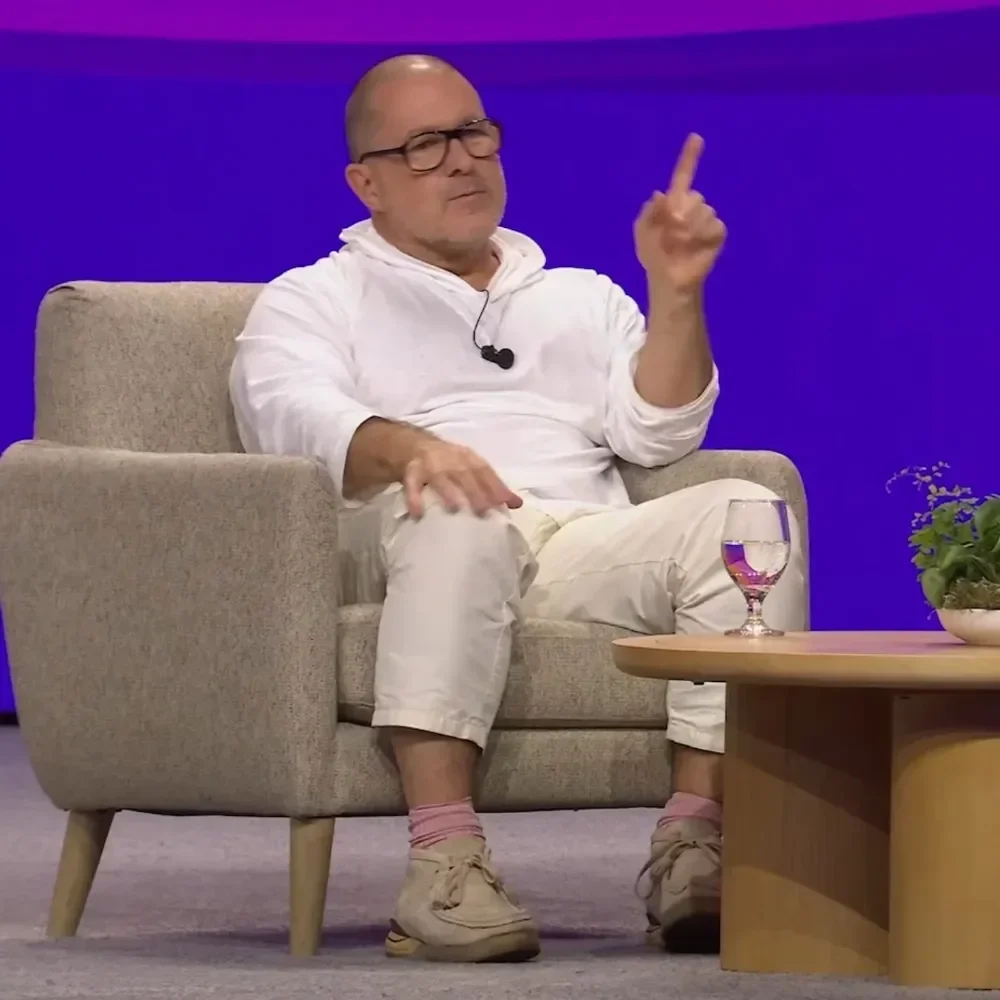
Jony Ive in the visvim Beuys Trekker-Folk
Great products come with the joy of owning them.
What accounts for this success? I believe a big part of it is visvim’s understanding of something that few other businesses get. It’s perfectly titled in this video following visvim’s Toshiyuki Ueno: the joy of ownership.
The joy of ownership comes from the joy of getting great use out of what you own—when something serves its design.
Consider the timeless brands. Their products serve specific functional purposes, and tend to descend from a heritage of world-class performance or quality. Rolex made watches for deep sea divers. Hermes made saddles for equestrians. Louis Vuitton made refined luggage trunks fit for classy air travel. Moncler outfitted Arctic expeditions. Porsche’s engineers invented rear engines to shave off milliseconds on the track at Le Mans. Despite these brands serving as status symbols today, they have legitimate traditions in craftsmanship and performance. Getting good use out of these products over time lent these brands credibility. After decades, these loans became equity in consumer mindshare. Now, people can throw money at their logos in an attempt to buy some credibility for themselves.
What is quality? Could we say that it’s the thing about a product that allows it to endure use over long periods of time?
But I don’t believe capacity for effective use is all that makes a great product. visvim products are powerful not just from their function but from the form that precedes it. They’re beautifully designed. Careful, specific, tact. You can lay a visvim piece on a table and give it a thorough examination. Even to the uninterested eye, I believe you can sense human attention and care, residually, everywhere you look. The horn button on a jacket harnessed with calfskin, the delicate stitching on the rear collar of a shirt, the clean curvature in the slight, exaggerated droop in the sleeve of a sweater.
Tomorrow looms a world where the cost of production is nearly nothing. The forms in which businesses propose value to customers are rapidly changing as we recalculate what it means to make and sell products. Today, most companies can have their customers just be their customers. But tomorrow’s customers will have to be fans. In a world of excess, intention matters—not how, but why? I get the sense that the winners will be intensely fixed on delighting customers—on going the extra mile in the pursuit of perfection and in treating quality as a imperative rather than an amenity. The founder of the most successful consumer technology company ever recognized this (and interestingly, he singles out the Japanese).
Perhaps the printing press, assembly line, and computer programming commoditized the first 90% of product development. Perhaps today’s no-code tools commoditizes the next 9%. The last 1%—product quality, customer experience, design—is the final frontier as it was the first. To find answers to the questions posed to our businesses by the future, maybe we can look to the past.
At the periphery of every great business, there is a cult.
There are a lot of reasons why I wear visvim. One of them is that it makes me feel connected to the shokunin spirit—a participant in those forgotten rites of old world craftsmen. It reminds me to hold a high bar for my own work and to make the pursuit of perfection my own animation. After all, if the makers of my clothes did, I probably could too.
